
Thank you for considering Fairfax Cryobank as you pursue your family-building dreams! Our dedicated production team follows rigorous screening and testing guidelines so that we may offer our clients a diverse pool of donors. Our high standards help to ensure the quality of our products.

To get started - call us
800-338-8407
+1 703-698-3976
How to Find A Sperm Donor
Just 3 Easy Steps
to Find a Sperm Donor:
Select your sperm donor using our Donor Search.
Place your order by calling us at
1-800-338-8407 or by ordering
onlineWe will confirm your order, collect some information* and ship your specimens.
* Includes preparation type needed, your physician information, and a completed Terms of Use with your first order.
We Stand Behind our Product
Joey Manhein Director of Production
M.P.H., B.S
M.P.H., B.S
Proud to be a Market Leader Around the Globe
Sean O’Callaghan Director of Business Development
Fairfax Cryobank has been a market leader since 1986, working with some of the best clinics and physicians worldwide. Helping you achieve your family-building dreams is why we get out of bed in the morning. With over three decades of satisfied clients, top-notch donor sperm, and unparalleled customer service – it’s not surprising Fairfax Cryobank is the trusted choice for donor sperm.
If your clinic is not affiliated with us, please let us know and we will take care of the rest. Thank you for considering Fairfax Cryobank, we wish you all the best on your path to parenthood.
We are Driven by our Mission to Help Families
Mike Buuck Director of Client Development
I've enjoyed being a part of the Fairfax Cryobank organization for over 20 years and relish my role of developing new partnerships and collaborating with existing clients.
One of the best parts of my job is the opportunity to work with dedicated physicians and their teams on a common goal of helping their patients become parents.
It's a mission that motivates and inspires me daily.
Top Notch Client Service is our Passion
Sulma Romero Co-Director of Client Services
We know that selecting a donor is a very personal process that is unique to each client, and we have a plethora of information available for every donor on our website. Our educated and highly trained Client Services team is committed to providing you with excellent customer service to streamline your experience with our donor semen program.
Our Team is Here to Help
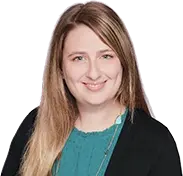
Kristie Burke Co-Director of Client Services
Sometimes having a helping hand can ease the overwhelming journey of finding a donor. Our dedicated Client Service team is available to connect with you regarding your donor sperm needs, whether you are shipping within the US or internationally. As one of the largest sperm banks in the world offering high quality, rigorously tested sperm donors, you can count on us to help complete your family.
Our Goal is to Help Create Healthy Babies
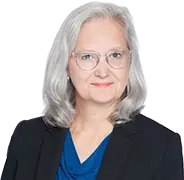
Suzanne Seitz Genetic Counselor
M.S., M.P.A.
M.S., M.P.A.
Our donors’ extensive screening increases your chances for a healthy outcome. From expanded genetic carrier testing for hundreds of conditions to detailed family medical history review and psychological testing, our goal is to offer you donors with the lowest risk possible.
Focused on Clients' Needs
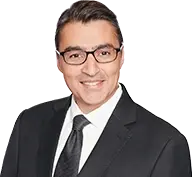
Nadeem Malik Co-CEO and General Manager
At Fairfax Cryobank, our team is constantly striving to assist our clients reach their goal of becoming parents. We are committed to making your experience working with Fairfax Cryobank as pleasant as possible. Clients around the world have relied on us for over 35 years and we are so pleased to hear from our clients whether it be to answer a question or to celebrate with you when we receive a birth report.
If you have any questions or suggestions on how we can improve our services, please contact Client Services at 800-338-8407 or info@fairfaxcryobank.com. If, for some reason, your issue is not resolved to your satisfaction, please send me a message and I will help. I would also be delighted to hear from you if you would like to offer a compliment or suggestion to help make our service even better.
Read More
How We Care
- Standards
You Can Trust Donors are extensively tested for infectious diseases, HPV and genetic diseases - 450+ Available
Donors Just 1% of donor applicants are accepted; choose from 100s of highly qualified donors - Personalized
Care Fast, responsive service; order sperm quickly and painlessly - Credentialed and Professional Fairfax Cryobank is FDA compliant and licensed by state agencies
We just wanted to say thanks for your assistance in selecting our donor over the past two weeks. You were so helpful and prompt with our photo matching, and particularly the 'looks' questions and personality 'reads'. Your time and care is truly appreciated. Everyone has been an A+ on Customer Service, and we'll recommend Fairfax to others.
- OR
Thanks to your facility we have a beautiful baby daughter. She joined our family in December, weighing 7 lbs 6 oz. She is absolutely wonderful. Thank you all for this terrific gift.
- MA
Thank you for doing our photo matching and for spending time with me on the phone answering my questions. You have taken away much of my anxiety away and given me a greater piece of mind regarding the donor we plan to use in the next few months.
- ND
We have been trying for over 3 years. Your efforts to let us know everything and your staff's very pleasant way of handling my inept questions have been wonderful. I would certainly recommend your services. Thanks from 'another future family.
- ME
I am a nurse, a mother and perhaps one of your biggest fans. You all have blessed us to no end. Thank you. Our daughter will be 2 at Christmas. As an RN I appreciate the extensive testing that you do to insure safety and success for the prospective families. I deal with many women/families who need to know that there are near miracles just waiting to happen.
- FL
I would like to extend my gratitude for all of the services you've provided to my wife and I over the past year. Two weeks ago we gave birth to a healthy baby girl! Without your professionalism and dedication, our dreams of conceiving a baby may not have been possible.
- NM
We have been researching sources for sperm donors that would meet our high standards. I am approaching my 40thbirthday and I want to make every month count. Your staff promptly returns calls, follows through on commitments and are very professional. I am the Director for my company's Customer Support group. I know the challenges of providing excellent customer service. I believe your staff goes 'above and beyond.
- CA
I would like to thank your company for providing the most excellent service over the past several years. Each time I called I was promptly assisted, especially during those 'living month-to-month' times. It is nice to know that your company exists and continues to help many women each day.
- SC
Thank you SO much for adding the staff impressions feature! We really wanted to get a sense of what our donor was like, what type of person he was. The staff impressions actually match what we view our son to be like, and it's wonderful to get that information that we can give to him later. We have nothing but wonderful things to say about your organization and recommend anyone who asks us to visit your site because of the experience we had. Thank you so much for making it possible for us to have our wonderful son!
- MO
Fairfax Cryobank provides the most comprehensive medical profiles, giving us confidence in a healthy match. In addition the personal profile, audio disc of the donor's voice and the photo of the donor as a baby offered us a human touch that made a difference I cannot adequately explain. This unique aspect of Fairfax's service provided us a wonderful glimpse of who the donor is, his interests and values. The opportunity to evaluate these qualities was equally important to us as knowing the donor's physical attributes.
- NJ
How can I possibly express our thanks and appreciation for the tremendous service you provide? Our daughter was born in April. I wanted you to know that you have all made a huge difference in our life as a family. You offered us a positive experience that will be a wonderful part of our lives forever. The effort you go through cannot be understated. What I once viewed as a potentially cold and scary experience, Fairfax turned into a lifetime of appreciation for what is possible. Thank you.
- NJ